Ever wondered why doors in period properties so often open “backwards”, blocking the space rather than folding neatly against the wall? You are not imagining it, and it was not a builder’s mistake. In Victorian, Georgian, and early 20th-century properties, door swings were designed with different priorities in mind:
Privacy: Doors opening into the centre of the room, rather than hugging the adjacent wall, acted as a visual screen. When someone cracked the door open slightly to enter, the door leaf physically blocked the view of the occupant from the hallway or serving staff.
Keeping the heat in: Before central heating, homes relied on fireplaces in individual rooms. A door opening into the room acted as a baffle against cold air rushing in from unheated corridors.
Servant and visitor etiquette: In larger period homes, domestic etiquette dictated controlling who saw what. Entering a room required stepping around the door leaf, forcing a brief pause before fully revealing the space.
So, should you swap them round?
Ultimately, you should do what feels right for the property. If you are developing a property for resale or letting, the modern layout brings undeniable advantages. Creating more natural movement, boosting light flow, and freeing up floor space will make a noticeable difference during viewings. Doors opening into the middle of a room can feel awkward and steal precious floor space,
Tips for re-hanging or re-handing existing doors
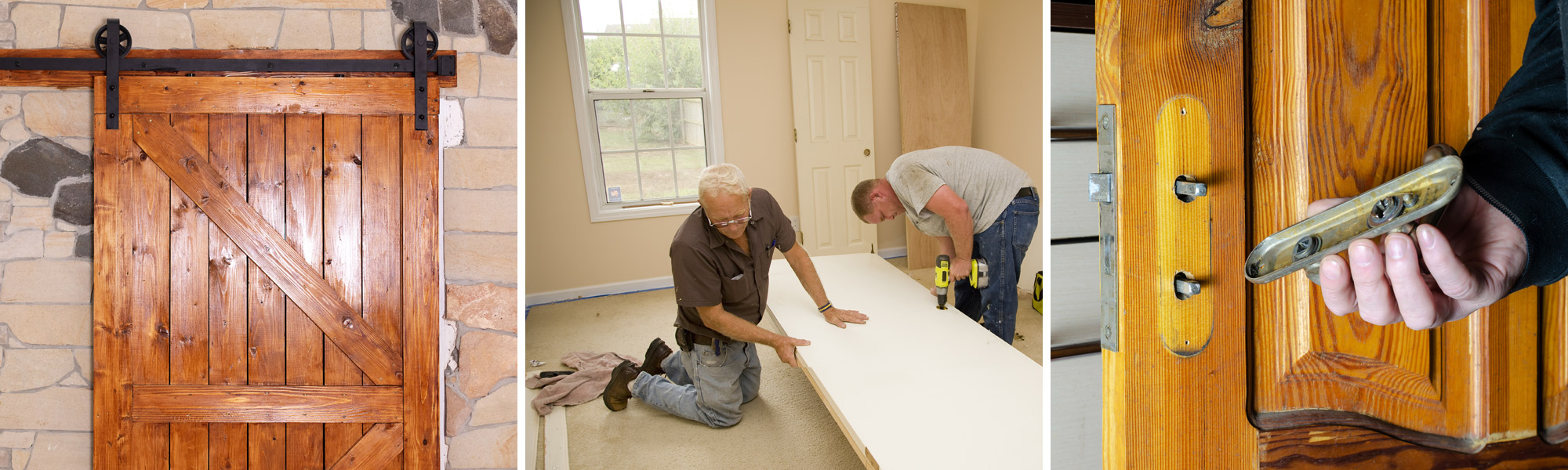
This is a straightforward job for a handy DIYer and reaps instant rewards in terms of space and flow. If a job’s worth doing, it is worth doing properly, so take the time to carefully chisel new mortise cut-outs for the hinges, and fill and make good the old hinge pockets on the opposite side.
Alternatively, it is an ideal task for a skilled carpenter, especially if you are updating several doors at once. Flipping the door swing is also the ideal opportunity to update door furniture, and swap out paint-covered hinges, handles, or latches to complete the refresh.
Alternatives worth considering
If re-swinging a standard door does not fully solve your layout challenge, there are a couple of smart joinery alternatives worth looking at. Pocket doors sliding directly into a concealed wall cavity offer a seamless, space-saving transition that eliminate door-swing issues entirely. They undeniably cost more, but they have more of a wow factor and can work brilliantly for tight spaces like en-suites, dressing rooms, or utility conversions.
For an eye-catching feature, sliding barn-style doors mounted on an exposed top track offer a similar space-saving benefit without needing to alter internal wall structures, and bring character to period conversion. For a more economical option, custom bi-fold or accordion doors work well where a full door might otherwise obstruct passing foot traffic or block access to nearby cupboards.
Remodelling a period home?
Updating a historic property is a balance between preserving character and supporting modern living. Whether you are reconfiguring a listed building or planning a full ground-floor extension, Charles Clarke & Son brings more 160 years of heritage joinery and structural expertise to every build.


