
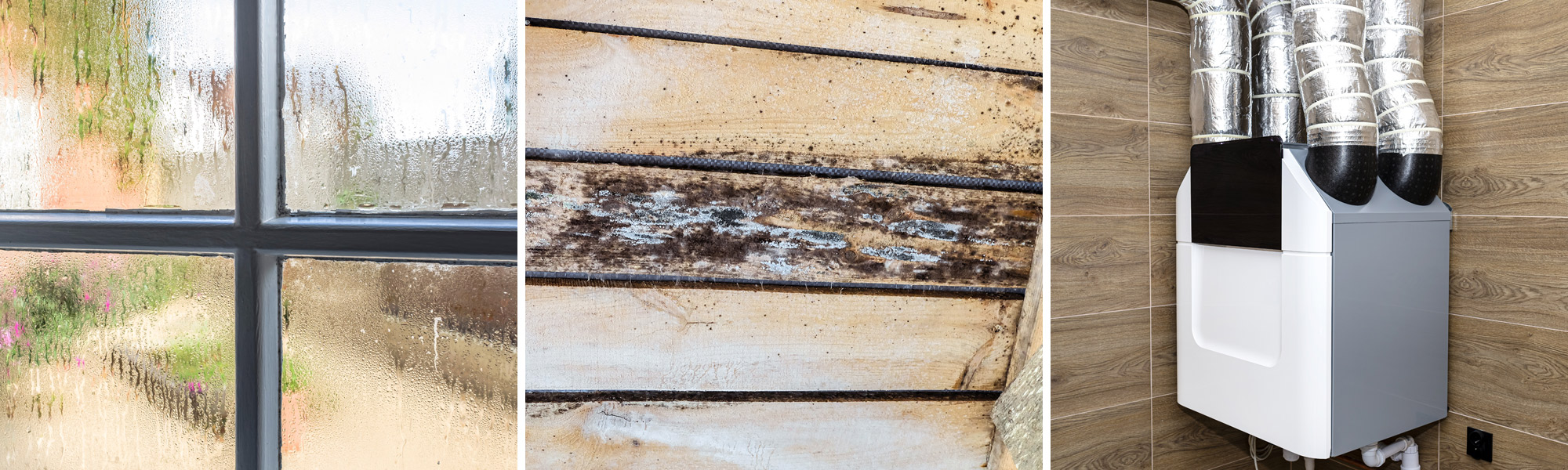
Condensation is arguably the most common type of moisture issue in older homes, but it’s often the most misunderstood. Left unaddressed, excess moisture can lead to black mould (and associated health issues), timber decay, and even compromise the building’s fabric. The key to solving condensation is about more than simply opening a window and requires insight onto how your building handles moisture.
The condensation equation: moisture, cold, and building physics
Condensation occurs when warm, moist internal air meets a surface that is below the dew point (the temperature at which the air can no longer hold the vapour, forcing it to turn back into liquid). Of course, condensation is most prevalent in winter, and in older properties, this is intensified by two primary factors. The first is moisture from everyday activities like cooking, washing, and drying clothes. The second, and often more critical factor, is Thermal Bridging. These are weak points in the building envelope, such as uninsulated corners, window reveals, or cold spots around floor joists, that conduct cold from the outside in. These areas become magnets for moisture and can lead to localised mould often seen behind furniture, for example.
The problem with modern interventions
Traditional solid-wall homes are inherently vapour permeable, due to the materials and construction methods used. This delicate moisture balance is destroyed when modern, non-breathable materials are introduced, such as non-breathable paint, cement render, or impervious wall insulation, for example. These can trap moisture inside a property, inevitably leading to condensation.
Installing modern double-glazing without adding controlled ventilation is another big no-no, as is blocking “draughty” original air bricks and redundant flues. This eliminates inadvertent ventilation older homes relied upon. Solving condensation in a fine or older home requires a hierarchy of solutions, moving from simple management to systemic building solutions:
Simple humidity management (lifestyle)
Simple changes can significantly lower the overall moisture load in the air, which is especially vital in winter when windows are kept closed and humidity can build up. These measures include keeping lids on pans when cooking, running extractor fans for 20 minutes after a shower, ensuring tumble dryers are vented properly (unless using a condensing type), and avoiding placing large items of furniture flush against external walls, particularly in cold corners, as this prevents air circulation and guarantees a condensation site.
Furthermore, running the heating constantly at a lower temperature is more effective than short, sharp blasts as it helps keep internal surface temperatures above the dew point, reducing condensation sites.
Architectural & systemic solutions
If simple lifestyle changes do not resolve the issues, permanent improvements to the property’s fabric and systems are likely required. Such as installation of a modern Mechanical Ventilation with Heat Recovery system, which extracts moist air while simultaneously recovering heat to help minimise heat loss and maintain a comfortable temperature.
For persistent, localised mould, a professional thermal assessment is likely required to identify and address the moisture-attracting thermal bridges or cold spots. Solutions often include the careful application of targeted internal wall insulation (IWI), which must be installed by specialists who understand and respect the vapour permeability of traditional walls.
When to consult a specialist
While basic condensation is manageable, persistent or severe mould issues in heritage properties require professional oversight. It is crucial to distinguish between simple humidity issues and more serious underlying problems like penetrating damp or rising damp.
At Charles Clarke & Son, our long-standing experience in traditional and heritage construction allows us to provide a full diagnostic service. We look beyond surface mould to understand the building physics at play, ensuring that any insulation or ventilation solutions we implement will enhance the building’s integrity, making a home more comfortable for generations to come.
If you are experiencing persistent condensation or require an expert assessment of your property’s moisture management strategy, contact us to discuss a tailored, long-term solution. We would be happy to help.


